
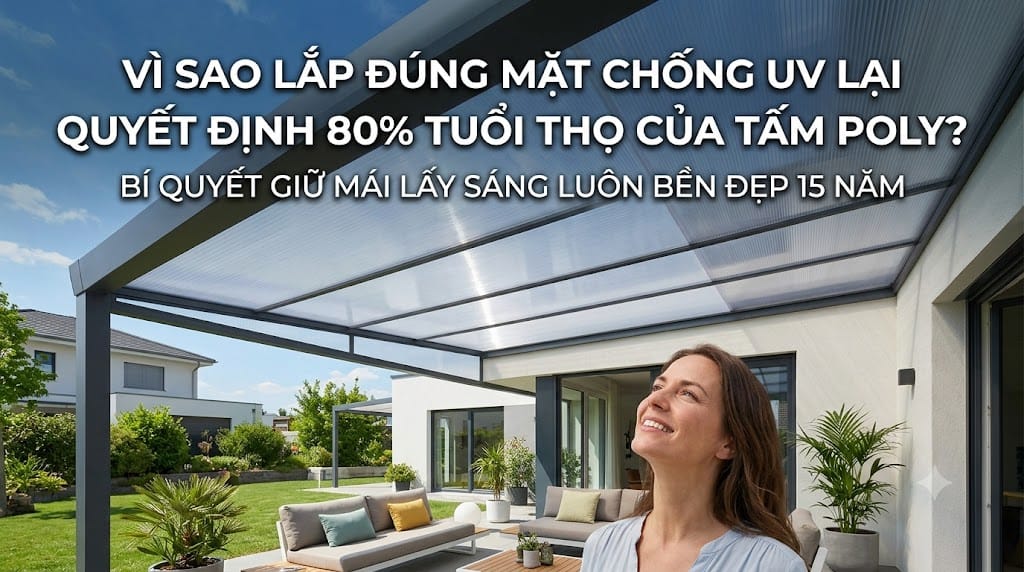
When building canopies or skylights using translucent Polycarbonate sheets, many people invest heavily in high-end materials and sturdy framing. However, after just 1–2 years of use, the plastic roof often shows signs of yellowing, brittleness, cracking, or easily breaking during hailstorms.
Up to 80% of the time, the root cause isn't poor plastic quality—it stems from an extremely common technical mistake: Installing the UV-protected side upside down!
Why does such a small detail dictate most of a structure's durability? Let's break it down below.
1. The Nature of Polycarbonate and its "Enemy": UV Rays
Polycarbonate is an exceptionally tough and impact-resistant thermoplastic polymer. However, the biggest weakness of its polymer bonds is their sensitivity to ultraviolet (UV) radiation from sunlight.
-
WITHOUT a UV protective layer: UV rays continuously bombard the chemical bonds inside the plastic, causing photo-degradation .
-
The Consequences: The sheet turns cloudy, yellows, loses its natural flexibility, becomes extremely brittle, and can snap with even a slight bend.
To overcome this, manufacturers coat one side of the sheet with a specialized UV Coated Layer (or both sides on ultra-premium product lines).
2. Severe Consequences of Installing the UV Side Upside Down
Many contractors, due to carelessness or lack of experience, ignore the warning labels on the protective film (PE Film), leading to the non-UV side facing the sky.
When installed incorrectly, the following scenarios unfold:
-
❌ Rapid Sheet Degradation: The side without UV protection absorbs 100% of the harsh daily solar radiation. The outer plastic layer breaks down quickly, turning cloudy, brittle, and damaged after just 1–3 years (compared to its designed lifespan of 10–15 years).
-
❌ Internal Destruction: The UV protection layer on the underside (facing indoors) is completely ineffective at blocking sunlight hitting from above. This causes the entire sheet to embrittle from the top surface downwards.
-
❌ Voided Manufacturer Warranty: Most reputable Polycarbonate sheet manufacturers only honor warranties (ranging from 5–10 years) against yellowing and cracking if the product is installed according to technical specifications and with the correct UV side facing up.
3. How to Identify and Correctly Install the UV Side During Construction
To avoid regrettable damage and maximize the lifespan of your project, you and your contractors should keep these key rules in mind:
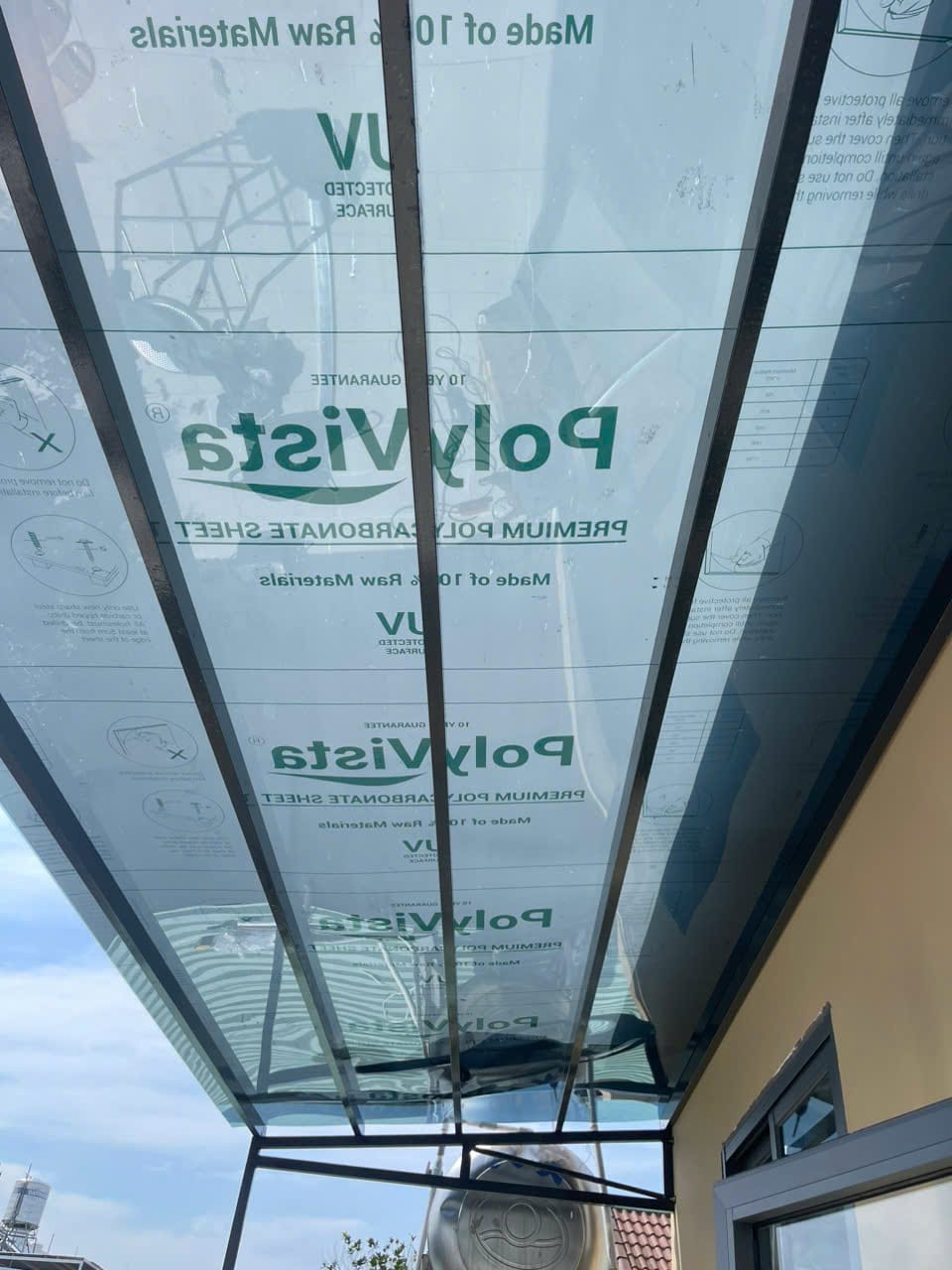
1. Distinguishing Sides via the Protective Film (PE Film)
-
UV-Protected Side (Facing the Sky): Always covered with a printed film featuring brand logos and clear warning text such as: "This side out" , "UV Protected Side" , or "This side facing the sun" .
-
Non-UV Side (Facing Downward): Typically covered with a clear or plain white film with no printed warning text.
2. Standard Film Removal Process
-
Do NOT peel the film before cutting/installation: This prevents scratches and avoids forgetting or confusing which side is UV-protected.
-
Peel back 5–10 cm around the edges: Only lift the film slightly at screw points or aluminum clamping strips to allow for installation.
-
Peel off the ENTIRE film IMMEDIATELY AFTER INSTALLATION: Never leave the protective film on the roof through sunny days. The heat will bake the adhesive onto the Polycarbonate sheet, making it extremely difficult to clean off and ruin its appearance.
CONCLUSION
A Polycarbonate sheet can only reach its maximum lifespan of 10–15 years when its UV "armor" is placed in the correct position to face the sun. Correct installation not only protects the sheet itself from aging, but also protects your family's health from harmful ultraviolet rays.
💡 Pro Tip: When inspecting a completed Polycarbonate canopy project, always double-check yourself that the installation crew has faced the side printed with UV warning text upwards before they peel off the protective film! Contact us now at 0356488152 for a detailed consultation and quote.