
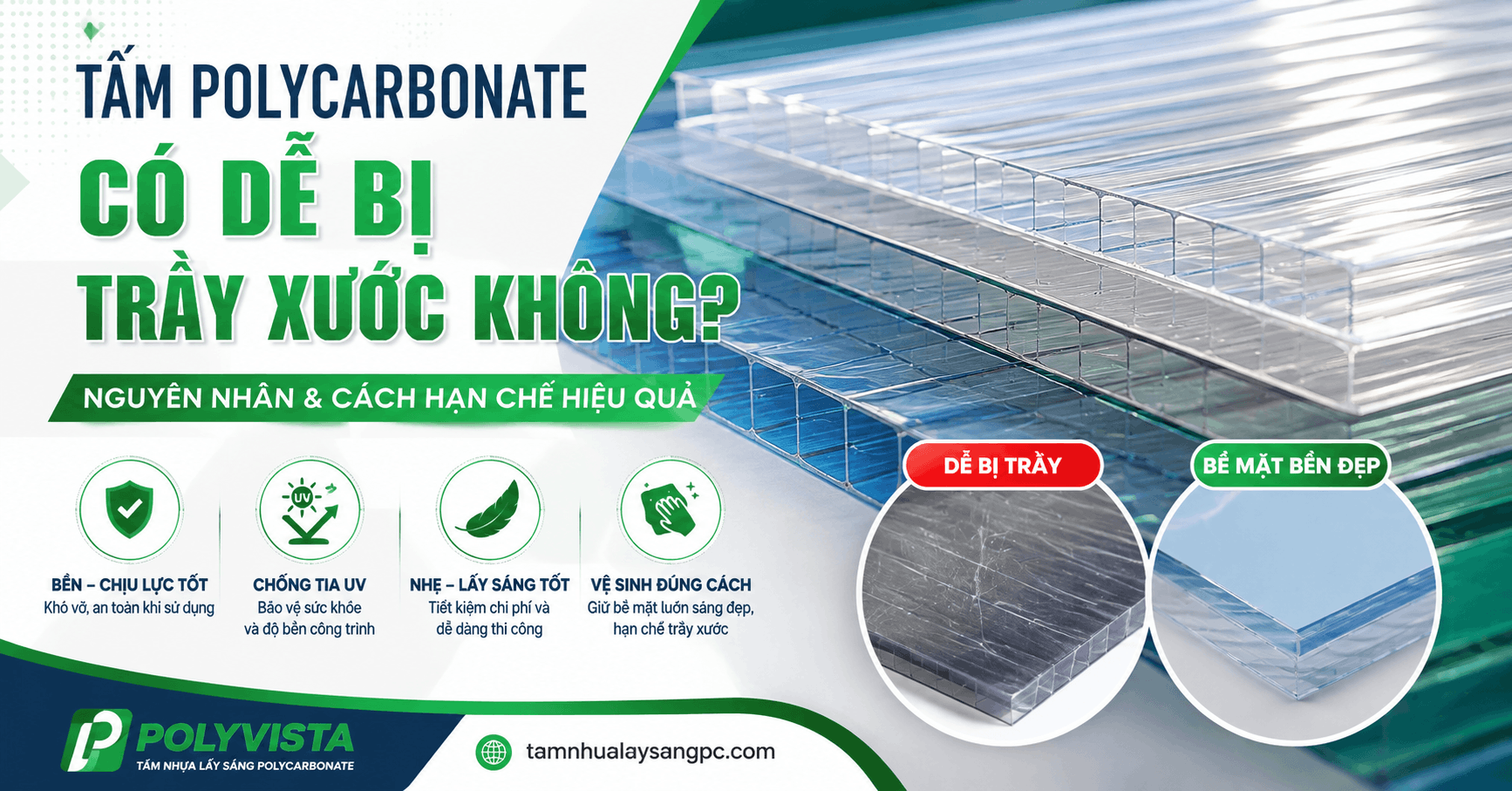
Is Polycarbonate Sheet Easy to Scratch? Effective Ways to Prevent Scratches
Is polycarbonate sheet easy to scratch? This is a common concern among customers considering Polycarbonate for canopies, skylights, carports, partitions, or other daylighting structures.
The answer is that polycarbonate sheets can be scratched when exposed to sharp objects, strong friction, or improper cleaning methods . However, by choosing high-quality products and using proper handling and maintenance methods, scratches can be significantly reduced.
1. Is Polycarbonate Sheet Easy to Scratch?
One of the key advantages of Polycarbonate is that it is lightweight, highly impact-resistant, and much less likely to break than conventional glass . However, high impact resistance does not mean that the surface is completely scratch-resistant.
During transportation, installation, and everyday use, Polycarbonate surfaces may develop scratches if:
- The sheet is dragged directly across concrete or gravel surfaces.
- Sharp objects come into contact with the surface.
- Hard cloths or abrasive materials are used for cleaning.
- A stiff brush is used to scrub dirt and dust.
- Drilling, cutting, or installation is performed incorrectly.
- Sand, dust, or metal particles rub directly against the surface.
Therefore, Polycarbonate is not a completely scratch-proof material . However, the degree of scratching depends largely on surface quality, installation methods, and how the sheet is handled and maintained.
2. Why Can Polycarbonate Sheets Get Scratched?
Polycarbonate has a certain level of surface hardness, but it is still softer than some types of glass and specialized scratch-resistant materials.
When sand, dust, or small particles are present on the surface, wiping too hard can cause these particles to act as abrasive agents and create scratches. In particular, transparent Polycarbonate sheets used for canopies or daylighting walls tend to show scratches more clearly than frosted or opaque sheets.
In addition, installation is one of the stages when scratches are most likely to occur . Dragging sheets across steel frames, placing them directly on the ground, or removing the protective film too early can damage the surface.
3. Common Causes of Scratches on Polycarbonate
Dragging the Sheet During Transportation
Polycarbonate sheets should not be dragged across soil, cement floors, or surfaces containing gravel or debris. Hard particles can create long scratches across the surface.
Using Improper Cleaning Tools
Do not use steel wool, abrasive pads, stiff brushes, or other materials that can scratch or abrade the surface.
Cleaning While the Surface Is Covered with Dust
This is a common mistake. If sand or dust is attached to the sheet and you wipe it directly with a cloth, hard particles can rub against the surface and create numerous fine scratches.
Careless Installation
Placing tools, screws, metal bars, or other hard objects directly on the sheet can also cause scratches.
Removing the Protective Film Too Early
During installation, the protective film helps protect the surface from dust, dirt, and mechanical impacts. Therefore, it is recommended to keep the protective film in place during most cutting, drilling, and installation work, then remove it according to the manufacturer's instructions.
4. How to Prevent Scratches on Polycarbonate Sheets During Installation
To maintain a clean surface and minimize damage, follow these basic guidelines:
First, do not drag the sheets. During transportation, lift or move the sheets properly instead of pulling them directly across the ground.
Second, keep the protective film on during installation. Do not remove the entire protective layer at the beginning of the installation process.
Third, avoid placing tools on the sheet surface. Screws, drills, knives, metal bars, and sharp objects should be kept in a separate, safe location.
Fourth, use suitable cutting and drilling tools. Proper techniques can reduce the risk of scratching or damaging the surface.
Fifth, do not allow the sheet to come into direct contact with gravel, stones, or other hard surfaces.
5. How to Clean Polycarbonate Sheets Without Causing Scratches
Proper cleaning is one of the most important factors in maintaining the clarity and appearance of Polycarbonate.
Step 1: Remove Dust and Dirt
Use clean water to wet the surface and rinse away dust and sand before wiping.
Step 2: Use a Soft Cloth
Use a clean, soft cloth and wipe the surface gently. Avoid abrasive materials.
Step 3: Do Not Scrub Aggressively
If dirt has remained on the surface for a long time, soften it with water or a suitable cleaning solution instead of trying to remove it by scrubbing hard.
Step 4: Rinse with Clean Water
After cleaning, rinse the surface thoroughly to remove any remaining dirt and cleaning solution.
Note: Always refer to the manufacturer's care and maintenance instructions before using any chemicals or cleaning solutions on Polycarbonate.
6. Do Polycarbonate Sheets Have a Scratch-Resistant Layer?
Not all Polycarbonate sheets have the same level of scratch resistance.
Some product lines may be specially designed or surface-treated to improve scratch resistance , but buyers should check the specific technical specifications of each product.
Therefore, when purchasing Polycarbonate, you should consider more than just sheet thickness . Other important factors include:
- Polycarbonate material quality.
- Clarity and light transmission.
- UV protection layer.
- Surface characteristics.
- Scratch resistance, if required for the project.
- Warranty period.
- Manufacturer's installation and maintenance instructions.
7. Polycarbonate vs. Glass: Which Is More Prone to Scratching?
This question requires a distinction between impact resistance and scratch resistance .
Polycarbonate has major advantages in terms of impact resistance and lightweight construction. Glass, on the other hand, generally has a harder surface and may offer better scratch resistance under normal conditions.
However, glass has the disadvantage of being more likely to break when subjected to strong impact , while Polycarbonate is more flexible and offers superior impact resistance.
Therefore:
- If you prioritize lightweight construction, impact resistance, and safety , Polycarbonate is worth considering.
- If you prioritize a hard surface and scratch resistance , glass may have an advantage.
- If Polycarbonate is used for canopies, carports, or skylights, choosing the right product and using proper installation techniques can significantly reduce the risk of scratching.
8. Can Scratched Polycarbonate Sheets Be Repaired?
This depends on the severity and depth of the scratches.
If there are only minor surface scratches, you may consider appropriate repair methods according to the manufacturer's recommendations. However, do not polish the surface or use strong chemicals without proper guidance , as this may cause cloudiness, deformation, or damage to the protective surface layer.
If the scratches are deep or the damaged area is extensive, replacing the affected sheet may be the more appropriate solution.
9. Tips for Choosing Polycarbonate Sheets with Better Scratch Resistance
If your project requires a high level of aesthetic quality, prioritize products with clear technical information about surface properties and protection.
When purchasing, ask the supplier:
- Does the sheet have a UV protection layer?
- Does the surface have scratch-resistant properties?
- Does it have a special coating or surface treatment?
- What is the recommended cleaning method?
- What are the warranty conditions?
- Is the product suitable for canopies, partitions, or skylights?
Do not choose a product based solely on its low price. A product that is suitable for the intended application and installed correctly can help reduce repair and replacement costs over the long term.
10. Conclusion: Is Polycarbonate Sheet Easy to Scratch?
Yes. Polycarbonate sheets can be scratched when exposed to hard materials, improper cleaning methods, or careless installation. However, scratches can be significantly minimized through proper transportation, storage, installation, and cleaning practices.
If you are choosing Polycarbonate for porch canopies, carports, skylights, factories, or other daylighting structures , you should consider sheet thickness, Polycarbonate type, UV protection, surface properties, and actual operating conditions at the same time.
FAQ – Frequently Asked Questions
Is Polycarbonate Sheet Easier to Scratch Than Glass?
Polycarbonate surfaces are generally more prone to scratching than glass, but Polycarbonate offers significant
advantages in terms of impact resistance and lightweight construction.
Can I Use a Cloth to Clean Polycarbonate?
Yes. Use a clean, soft cloth and wet the surface first to help minimize friction caused by dust and sand.
Should I Use a Hard Brush to Clean Polycarbonate?
No. A hard brush may increase the risk of scratching the surface.
Should the Protective Film on Polycarbonate Be Removed Immediately?
No. The protective film should not be removed too early. Keep it on during transportation and most of the
installation process, then remove it according to the manufacturer's instructions.
Are There Scratch-Resistant Polycarbonate Sheets?
Yes. Some product lines are specially treated or designed with surface properties that improve scratch resistance.
Always check the specific technical specifications before purchasing.