
Why Do Polycarbonate Sheets Crack or Turn Yellow? Causes, Solutions, and Prevention
Polycarbonate sheets are widely used for roofing, skylights, greenhouses, and various daylighting applications due to their excellent light transmission, durability, and impact resistance. However, over time, some users may notice cracking, yellowing, or reduced transparency, which can affect both appearance and performance.
At Tamnhualaysangpc.com, we frequently receive questions about why polycarbonate sheets deteriorate and how to extend their lifespan. In most cases, cracking and yellowing are caused by product quality, environmental exposure, or improper installation.
In this article, we will explore the most common causes of polycarbonate sheet damage and provide practical solutions to prevent these issues.
Why Do Polycarbonate Sheets Crack?
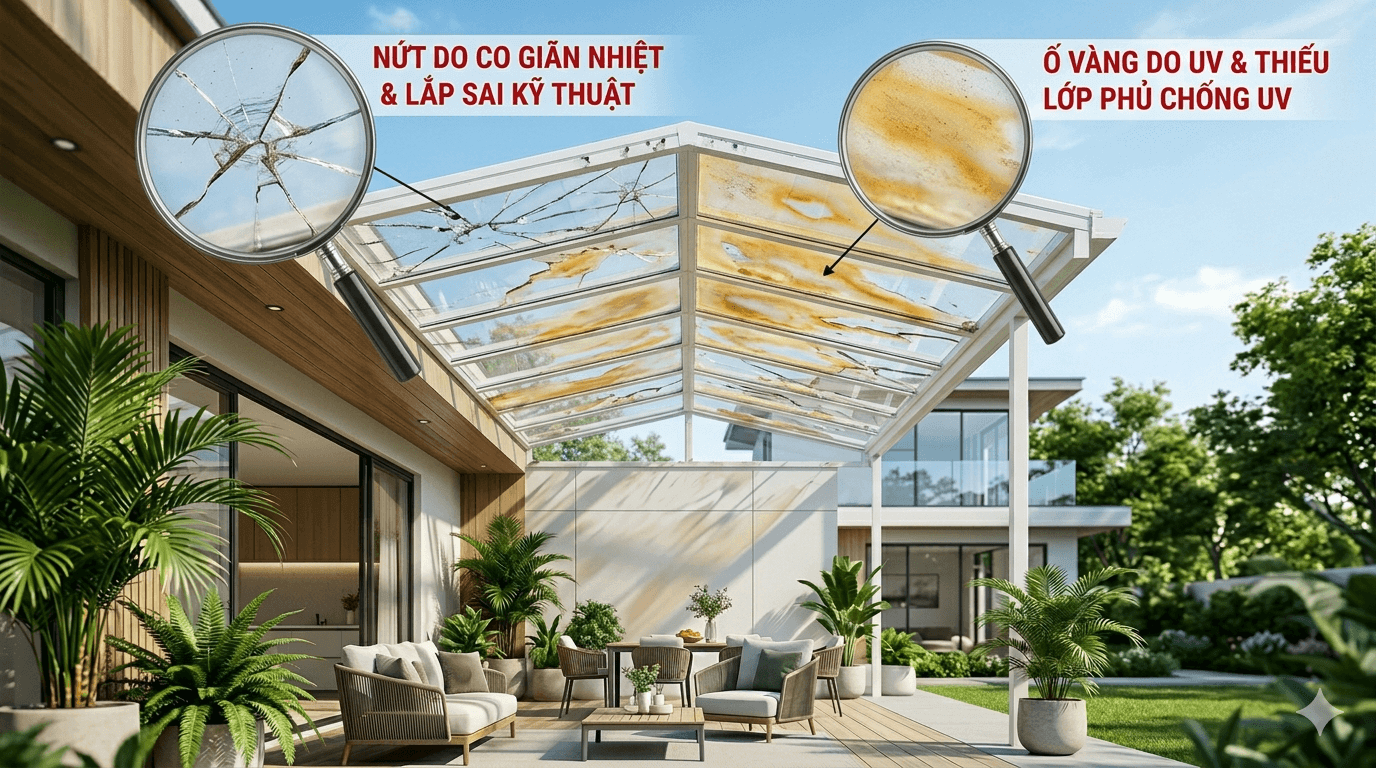
Low-Quality Polycarbonate Materials
Sheets made from recycled or low-grade materials often have reduced durability and may become brittle after prolonged outdoor exposure.
Improper Installation
Overtightened screws, insufficient expansion gaps, or drilling holes too close to the sheet edge can create stress points that lead to cracking over time.
Impact Damage
Falling branches, hail, heavy objects, or strong winds can damage the sheet surface and create cracks.
Long-Term Weather Exposure
Continuous exposure to UV radiation, temperature fluctuations, and harsh weather conditions can gradually weaken the material.
Why Do Polycarbonate Sheets Turn Yellow?
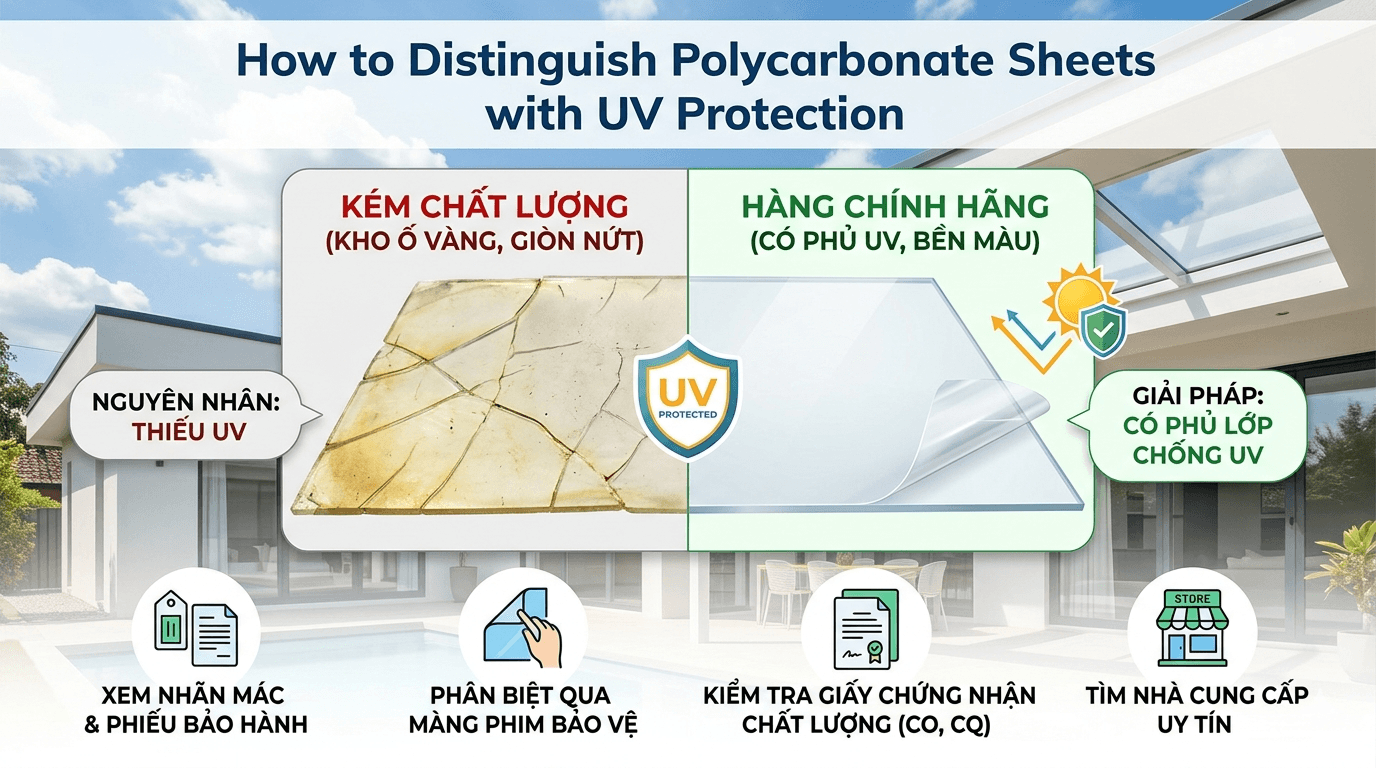
Lack of UV Protection
Polycarbonate sheets without UV-resistant coatings are more likely to discolor and turn yellow when exposed to sunlight for extended periods.
Poor Material Quality
Inferior raw materials often have lower resistance to ultraviolet radiation and environmental aging.
Improper Cleaning Methods
Using abrasive cleaners or harsh chemicals can damage the protective surface and accelerate yellowing.
Dirt and Pollution Build-Up
Dust, industrial pollutants, and environmental contaminants can accumulate on the surface, reducing transparency and affecting appearance.
How to Fix Cracked or Yellowed Polycarbonate Sheets
-
Replace severely damaged sheets.
-
Clean surfaces regularly with mild soap and water.
-
Avoid aggressive cleaning chemicals.
-
Reinforce unstable support structures if necessary.
-
Upgrade to high-quality UV-protected polycarbonate sheets when replacement is required.
How to Prevent Cracking and Yellowing
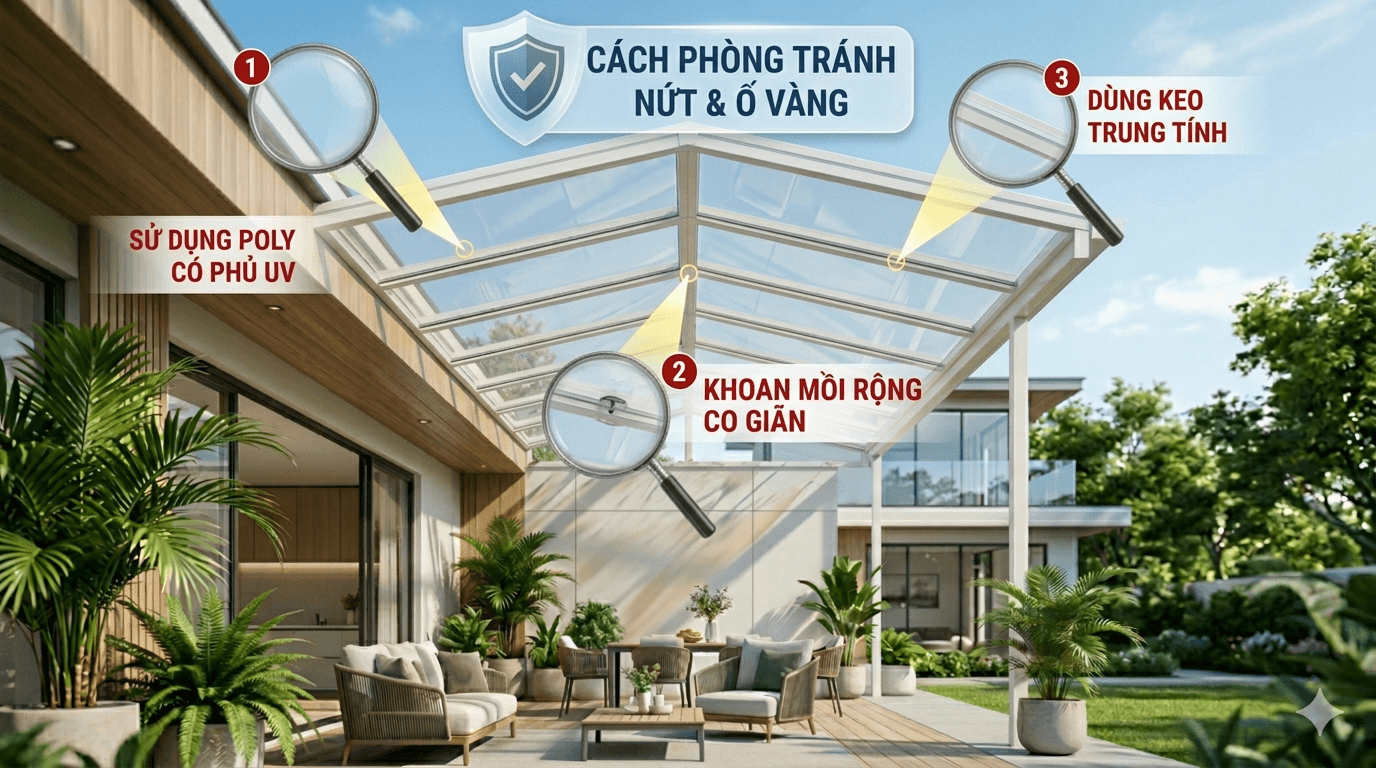
Choose High-Quality Products
Select UV-protected polycarbonate sheets from reliable suppliers.
Follow Proper Installation Practices
Allow for thermal expansion, use suitable accessories, and avoid overtightening fasteners.
Perform Regular Maintenance
Clean the sheets every few months to remove dirt and environmental contaminants.
Conduct Routine Inspections
Check roofing systems and fastening points regularly to identify potential issues before they become serious.
Conclusion
Cracking and yellowing in polycarbonate sheets are often caused by poor-quality materials, environmental exposure, and installation mistakes. By choosing high-quality UV-protected products, following proper installation guidelines, and performing regular maintenance, you can significantly extend the lifespan of your polycarbonate roofing system.
If you need professional advice or a quotation for high-quality polycarbonate sheets, contact Tamnhualaysangpc.com today. We provide reliable polycarbonate solutions designed for long-lasting performance and durability.